
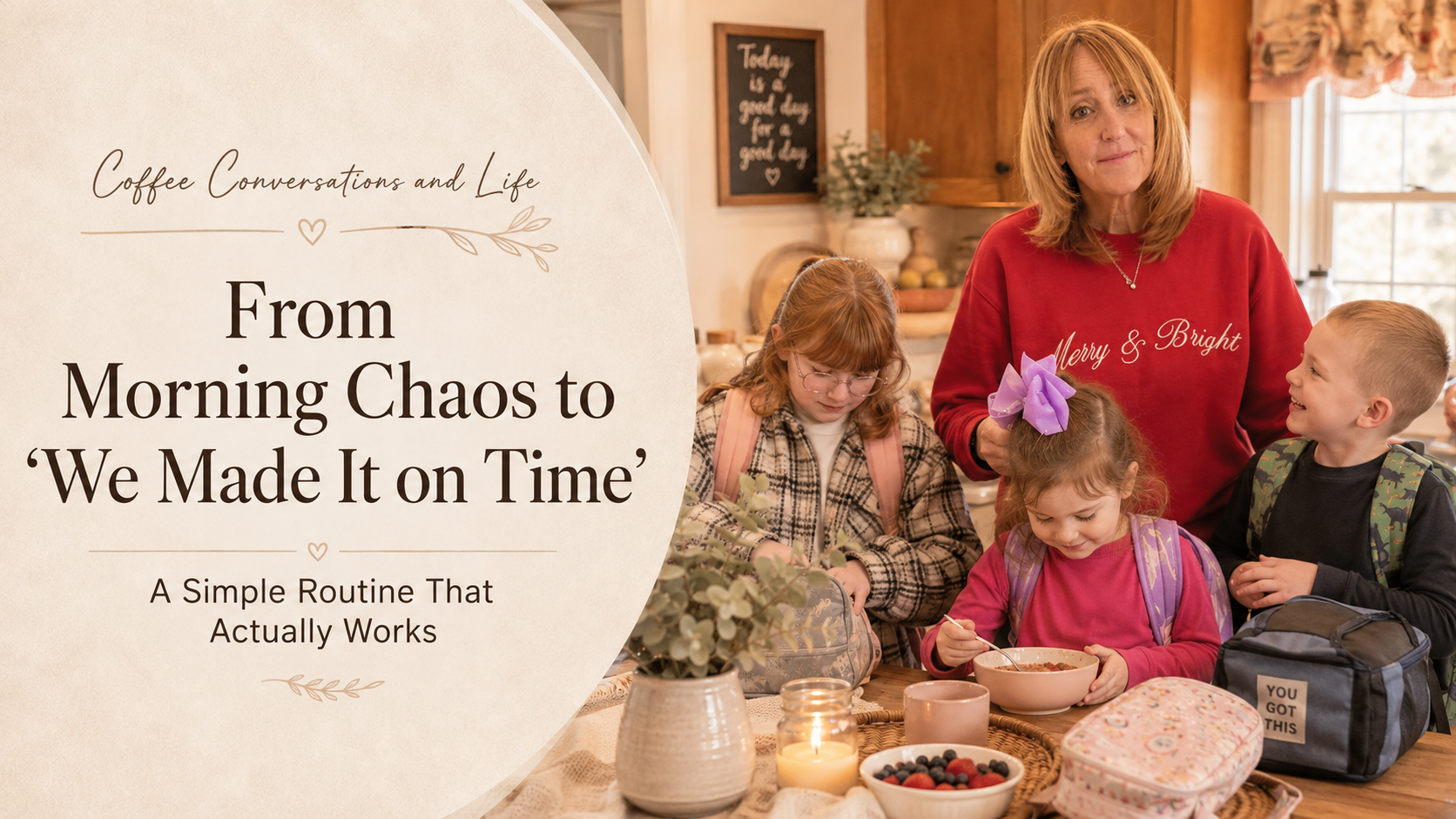
From Morning Chaos to “We Made It on Time”: A Simple Routine That Actually Works
There was a time when nearly every weekday morning in our house felt like an emergency.
The kitchen counter was covered with half-open lunch containers, school papers, and yesterday’s mail. My coffee sat untouched and slowly turned cold while I searched under furniture for a missing shoe.
Someone was upset because the “right” socks were nowhere to be found. Someone else suddenly remembered a permission slip that needed to be signed. A backpack had disappeared, even though I was almost certain I had seen it five minutes earlier.
And somewhere between checking the clock and raising my voice, that familiar thought started running through my head:
We are always late.
Not, “We are running late today.”
Not, “This morning is difficult.”
We are always late.
That little sentence made everything feel worse. It turned one stressful morning into evidence that I was failing at mornings altogether.
By the time we finally reached the door, everyone was frustrated. I was rushing the kids out with reminders that sounded more like commands, and they were starting their day feeling hurried and criticized.
One morning, after an especially intense disagreement involving socks, cereal, and a missing water bottle, I stood in the kitchen looking at the mess and thought:
Something has to change.
I did not need a perfect color-coded schedule. I did not need to wake up at 5:00 a.m. and prepare a homemade breakfast before anyone else opened their eyes.
I just needed a simple rhythm everyone could understand.
Why a Predictable Routine Helps
Children usually handle mornings better when they know what is going to happen next.
Predictability helps them feel safer. Instead of wondering what they are supposed to do—or waiting for an adult to give ten separate instructions—they can begin moving through a familiar sequence.
That sense of knowing what comes next can reduce anxiety, especially for children who struggle with transitions, time pressure, or unexpected changes.
Routines can also reduce negotiating and power struggles.
Instead of the parent becoming the person who is constantly demanding that everyone hurry, the routine becomes the guide.
You can say:
“First we get dressed, then we eat. That’s our morning plan.”
Or:
“Let’s check the list and see what comes next.”
The routine becomes the boss, not the parent.
Research on childhood development consistently shows that regular family routines can support children’s social-emotional development and help them build self-regulation skills. In everyday language, that means routines give children repeated opportunities to practice starting tasks, moving between activities, managing frustration, and becoming more independent.
But routines are not about running your home like a military operation.
They are about creating a predictable rhythm that makes everyday life feel a little easier.
The Morning Routine That Changed Our Days
The routine that helped us was not complicated. It had three parts:
- Preparing the night before
- Following the same basic morning flow
- Protecting the final ten minutes before leaving
You can use this routine exactly as written, or change it to fit your children, schedule, and household.
The goal is not to copy someone else’s morning perfectly.
The goal is to create a routine your family can actually repeat.
Part A: Prepare the Night Before
The most important part of our morning routine happens before the morning even begins.
I used to think we could save everything for the next day. Packing backpacks, choosing clothes, finding shoes, and checking the school calendar all seemed like small tasks.
They were small tasks.
But when five small tasks appeared at the same time, ten minutes before we needed to leave, they became one big crisis.
Now we try to complete four simple steps the night before.
1. Pack Backpacks and Place Them by the Door
Homework, library books, folders, permission slips, and any special school items go into the backpack before bedtime.
Then the backpacks are placed in the same location near the door.
Not near the couch.
Not somewhere in the bedroom.
Not “wherever we remember putting them.”
The same place every night.
This one change has prevented more frantic searches than almost anything else we tried.
2. Choose Clothes Together
We choose the next day’s clothes before bed, including:
- Shirt
- Pants, skirt, or shorts
- Underwear
- Socks
- Shoes
- Jacket or sweater, when needed
Including socks and shoes matters.
Those were often the items that caused the most trouble in our house. A child may happily choose a shirt and pants at night, only to reject every available pair of socks the next morning.
Choosing together gives children some control while still keeping the morning manageable.
You might say:
“Would you like the blue shirt or the green one tomorrow?”
Two reasonable choices are often easier than opening the entire closet at 7:15 in the morning.
3. Have a Five-Minute Tomorrow Check-In
Before bedtime, we take a few minutes to talk about the next day.
We ask:
- Is anything special happening at school?
- Do you need to bring a library book?
- Is it a sports, music, or activity day?
- Do you need a signed form?
- Is there anything you are worried about?
- Will tomorrow’s schedule be different?
This check-in is brief. It is not meant to become a long planning meeting.
It simply gives everyone a chance to remember important details before the morning rush.
4. Set Out the Breakfast Basics
Breakfast does not need to be elaborate.
We simply make the easy choices visible and available.
That might mean placing bowls and spoons on the counter, putting fruit where children can reach it, or deciding the night before whether breakfast will be cereal, toast, yogurt, or eggs.
Reducing decisions in the morning helps everyone move more smoothly.
Part B: Follow the Same Morning Flow
Our basic morning sequence looks like this:
- Wake up
- Use the bathroom
- Get dressed
- Eat breakfast
- Brush teeth and complete final grooming
- Put on shoes
- Pick up backpack
- Leave
The exact order may look different in your home.
Some children need breakfast before they can do anything else. Others need to get dressed immediately or they will become distracted.
The order is less important than the consistency.
When children follow approximately the same sequence each day, they begin to need fewer reminders.
Instead of giving a stream of instructions—
“Get dressed.”
“Did you brush your teeth?”
“Where are your shoes?”
“Have you packed your backpack?”
—you can refer back to the routine.
“You finished breakfast. What comes next on your list?”
This shifts some responsibility to the child without expecting them to manage the entire morning alone.
Use a Visual Checklist
A visual checklist can be especially helpful for younger children, children who are easily distracted, or children who struggle to remember several instructions at once.
The chart can use pictures, simple words, or both.
A basic morning chart might say:
- Wake up
- Bathroom
- Get dressed
- Eat breakfast
- Brush teeth
- Shoes on
- Get backpack
- Hug and go
You can place the chart on the refrigerator, bedroom door, bathroom mirror, or another location your child will see.
The checklist does not need to be decorative or complicated.
A handwritten list on a sheet of paper can work.
The important part is that children can look at it without waiting for you to repeat every direction.
Part C: Protect the Final Ten Minutes
The last few minutes before leaving were often the most stressful part of our mornings.
Everyone was almost ready, but not quite.
That was also the exact moment when someone wanted to tell me a long story, ask a complicated question, search for a toy, change an outfit, or begin a serious conversation.
So we created what I think of as the “no-new-conversations” rule.
During the most stressful ten minutes before leaving, we do not begin new topics, make major requests, or start serious discussions.
This does not mean we stop talking to each other.
It means we stay focused on finishing the routine.
During those final minutes, we avoid:
- Starting a long story
- Asking for a new hairstyle
- Searching for a nonessential toy
- Discussing a difficult school problem
- Requesting a change in transportation plans
- Beginning an argument about something that can wait
I might say:
“I want to hear the rest of that story. Let’s finish getting into the car, and then you can tell me.”
Or:
“That sounds important. We are in our leaving time right now, so let’s talk about it after school.”
This helps me respond without dismissing the child or allowing a new issue to derail the morning.
Use Timers or Music
Some children respond better to sounds than verbal reminders.
A timer can make the transition feel more neutral:
“When the timer rings, it’s time to put on shoes.”
Music can work too.
You might use:
- One song for getting dressed
- One song for breakfast cleanup
- One song for brushing teeth and putting on shoes
The goal is not to race children or make them anxious.
The music simply creates a recognizable cue that helps move the routine forward.
Real-Life Grace Notes
Even with a good routine, some mornings will still fall apart.
Someone will wake up tired.
A water bottle will leak.
A child will suddenly remember a project.
The dog may get sick on the rug at the exact moment you need to leave.
A routine does not prevent real life from happening. It simply gives you a structure to return to when real life gets messy.
Here are a few things that make our routine more forgiving.
Keep One Backup Breakfast Available
Choose one simple breakfast that is always available when time is short.
That might be:
- A granola bar and banana
- Yogurt and fruit
- Toast with peanut butter
- A breakfast bar
- A cheese stick and crackers
This is not the morning to worry about creating the most impressive breakfast possible.
Fed and out the door is sometimes the win.
Build in a Five-Minute Buffer
Try setting your target departure time five minutes earlier than the actual time you must leave.
That small buffer can absorb a missing shoe, spilled drink, bathroom emergency, or last-minute signature.
You may not use the buffer every day.
But when you need it, you will be glad it is there.
Adjust the Routine When Life Changes
A routine that works in September may need to change in January.
Children grow. School schedules change. Activities begin and end. Weather affects clothing. Family responsibilities shift.
Changing the routine does not mean the routine failed.
It means your family is adapting.
Focus on Progress, Not Perfection
You may still raise your voice sometimes.
Your child may refuse to follow the checklist.
You may forget to prepare everything the night before.
That does not erase the progress you are making.
A routine is not successful because it works perfectly every day.
It is successful because it helps more often than it does not.
How Our Mornings Feel Different Now
Our mornings are not silent, graceful, picture-perfect events.
There are still reminders. There are still tired children. There are still mornings when someone moves at the approximate speed of a sleepy turtle.
But everyone usually knows the next step.
The backpacks are where they belong. Shoes are easier to find. Clothing decisions have already been made.
There are fewer missing-shoe emergencies and fewer moments when I feel like I am shouting instructions into a hurricane.
Because we are not spending every second searching and arguing, we have more opportunities for connection.
Sometimes there is a quick joke at breakfast.
Sometimes a child tells me something about school while putting on shoes.
Sometimes we have enough calm left for a real hug at the door instead of a rushed, “Go, go, go!”
I often think:
We are still not perfect, but we are on time most days—and the house feels less like a war zone.
That is enough for me.
Get the Free “Calmer Mornings” Printable
Want a ready-made morning checklist you can tape to the refrigerator or bedroom door?
Grab the free Calmer Mornings Printable when you join the Coffee Conversations and Life email list.
Inside, you will find:
- A simple visual morning checklist
- A night-before preparation page
- A five-minute tomorrow check-in
- A blank routine template you can customize for your family
It is designed to be practical, flexible, and easy to use.
No complicated system. No giant binder. No expectation that you completely transform your family overnight.
Just a few simple pages to help make tomorrow morning easier.
[Get the Free Calmer Mornings Printable]
Start With One Small Change
You do not have to introduce the entire routine at once.
You could start by placing backpacks near the door tonight.
You could choose clothes before bedtime.
You could write the morning steps on a piece of paper and tape it to the refrigerator.
Small changes count.
Try the routine for one week and notice what helps. Adjust what does not work. Keep the parts that make your mornings feel calmer and more connected.
Then take your next step:
- Try one piece of the routine tonight.
- Download the free Calmer Mornings Printable.
- Read “What to Do When After-School Meltdowns Hit” or “A Bedtime Routine That Helps Everyone Wind Down.”
Tomorrow morning does not need to be perfect.
It just needs to feel a little more manageable than today.